THANK YOU FOR SUBSCRIBING
× 
Enterprise Security Mag Weekly Brief
Be first to read the latest tech news, Industry Leader's Insights, and CIO interviews of medium and large enterprises exclusively from Enterprise Security Mag
Enterprise Security Magazine

American Global Security
Reliable Physical Security, Tailored for Every Site

How does American Global Security ensure reliability on every shift?
These diverse strategies reflect a risk-based mindset cultivated over decades, grounded in honest assessments, tailored staffing plans and clear goals. Several clients from municipal and federally regulated environments have approached AGS after struggling with inconsistent guard attendance and poor reporting. With a new security system, the clients not only gained better safety coverage but greater visibility and confidence in site operations.
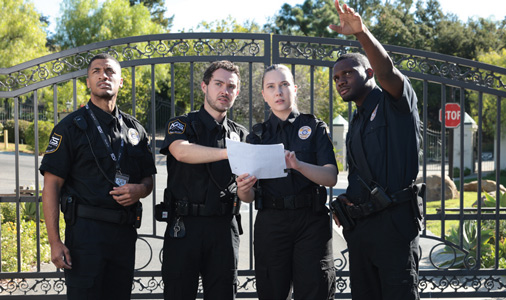 Every shift at American Global Security (AGS) follows a disciplined rhythm. Professionally trained, site-assigned guards show up on time, follow strict protocols, operate under careful supervision and provide real-time reporting.
“We don’t sell security, we make reliability measurable,” says Sulaiman Wardak, regional vice president.
AGS’s growth is a reflection of trust earned, not marketed. For the last 45 years, the Los Angeles-based company has been creating a security system that is accountable, consistent and built for follow-through. It has over 800 trained security professionals deployed across dozens of sites.
Site-Specific Security Strategies
How are security strategies adapted to different industry environments and specific operational needs?
AGS does more than simply placing guards on-site. It carefully evaluates the unique threat potential of each environment and creates staffing structures that fit those needs. It recognized early on that uniform protection models are ineffective across different industries.
In environments where emotional volatility runs high, such as healthcare facilities, AGS’s security guards prioritize communication and de-escalation over physical force. Hospitals operate around the clock under constant pressure, stress and urgency. In this setting, the guards are trained to manage heightened emotions, prevent disputes and ensure medical teams can work without interruption.
In places built around commerce, such as retail stores, the challenge is to maintain order without coming in the way of business. High foot traffic and constant interaction demand a visible, measured security response. Here, AGS’s guards maintain order, conduct thorough access-control checks and deter theft while remaining approachable to shoppers and staff.

We don’t sell security, we make reliability measurable.

These diverse strategies reflect a risk-based mindset cultivated over decades, grounded in honest assessments, tailored staffing plans and clear goals. Several clients from municipal and federally regulated environments have approached AGS after struggling with inconsistent guard attendance and poor reporting. With a new security system, the clients not only gained better safety coverage but greater visibility and confidence in site operations.
Technology Built for Accountability
How does AGSTrac technology strengthen oversight and guard accountability in real time?
This level of accountability and transparency is made possible by AGSTrac, the company’s proprietary software platform for real-time guard monitoring and verification. Its 100-meter geofencing and non-replicable presence tokens confirm guard presence and enable immediate reporting. This allows management to intervene early when performance falls outside expectations. At AGS, technology supports professional judgment by ensuring decisions are grounded in accurate, real-time information.
With this oversight in place, AGS determines the security models based on each establishment’s operating conditions. The firm places unarmed guards where a strong presence and clear communication can deter threats, whereas armed personnel are assigned when enhanced supervision is needed. In high-risk situations like fire-related accidents, AGS dispatches fire-watch security guards who are equipped for these scenarios and follow strict safety protocols at all times. For sites where the threat is spread across large areas and increases during off-hours, AGS shifts to patrol-based models with patrol routes and timings verified through AGSTrac. For example, in asset-heavy environments like construction sites, AGS sends patrolling guards due to valuable equipment, changing crew and increased vulnerability during non-operational hours.
Proactive and Skilled Security Guards
What could realistically go wrong at the place, and how to reduce that risk? This question shapes every assignment, reflecting AGS’s proactive, disciplined and risk-conscious approach to security planning.
How are security guards trained and prepared for site risks?
Its security guards receive training based on the specific environment they are entering. They all meet BSIS licensing requirements and hold additional certifications such as firearms, baton training, CPR/First Aid/AED, de-escalation, active threat awareness or fire watch procedures, based on assignment needs. Once on-site, the supervisors actively mentor and support the guards because, at AGS, training isn’t a one-time checkbox, but an ongoing process that fuels both performance and accountability.
Most security failures don’t come from dramatic events. Instead, they often slip in quietly through overlooked details. AGS approaches each routine moment with a sharp vigilance that prevents minor issues from becoming major liabilities. With predictable guard presence that maintains constant oversight and addresses risks before escalation, clients experience fewer lapses, reduced risk and smoother business operations.
Selecting Security Guard Solutions That Deliver Measurable Reliability
Executives responsible for physical security face a familiar dilemma. The market is saturated with providers offering armed and unarmed guards, patrol services and fire watch coverage, yet performance gaps often surface only after an incident, a missed shift or a reporting failure. On paper, many firms appear comparable. In practice, the difference between adequate coverage and sustained protection lies in consistency, supervision and verifiable accountability.
Security functions break down when treated as interchangeable labor. Healthcare facilities contend with emotional volatility, patient privacy and sudden escalation. Retail environments depend on visible deterrence and customer-facing professionalism without disrupting the experience. Construction sites carry exposure tied to high-value equipment, fluctuating crews and after-hours vulnerability. A credible provider must demonstrate the ability to assess these risk profiles independently and shape deployment models accordingly, rather than default to templated staffing plans.
Decision-makers should pay close attention to how a firm approaches site assessment and guard preparation. Effective programs begin with a direct evaluation of what could realistically go wrong at a location and how those risks are reduced through staffing structure, post orders and supervision. Guard selection and training should be assignment-driven. Environments that require de-escalation skills and strong communication call for different preparation than those that justify armed presence or patrol-based coverage. Licensing and certifications are baseline requirements; what distinguishes stronger providers is how training is reinforced in the field and tied to performance expectations.
Technology also warrants scrutiny, not as a marketing feature but as a control mechanism. Real-time reporting, GPS verification and presence confirmation tools enable clients to see when guards are on site, how patrols are executed and how incidents are documented. Systems that confirm attendance through geofencing or non-replicable verification tokens move security from assumption to evidence. For executives accountable to boards, regulators or insurers, visibility into guard activity reduces uncertainty and supports early intervention when standards slip.
Scale introduces another layer of complexity. Expanding to multiple sites or jurisdictions requires disciplined supervision, clear reporting channels and consistent documentation practices. Firms that can maintain oversight across dozens of locations while preserving local accountability tend to offer more predictable outcomes. Growth achieved through structured processes rather than volume alone signals a model designed for sustained performance.
American Global Security illustrates how these elements can be integrated into a cohesive program. It frames its approach around making reliability measurable rather than relying on brand claims. Its proprietary AGSTrac platform confirms guard presence through geofencing and unique verification tokens, enabling real-time reporting and documented patrol execution. Armed and unarmed assignments are deployed based on site-specific risk analysis, while patrol and fire watch services follow defined procedural protocols. Guard preparation is tailored to each environment, supported by required licensing, assignment-specific certifications and field supervision that reinforce expectations. For executives seeking a security partner that emphasizes discipline in daily execution, transparent reporting and risk-based deployment, it stands out as a dependable choice.
...Read more
Company
American Global Security
Management
Sulaiman Wardak, Regional Vice President
Description
American Global Security is a private security services firm headquartered in California, delivering trained guards and disciplined on-site supervision across diverse environments. Its approach is built on risk-based planning, accountability, and consistent execution at the ground level.